About this pair
Celtic and Celtic, black, side by side
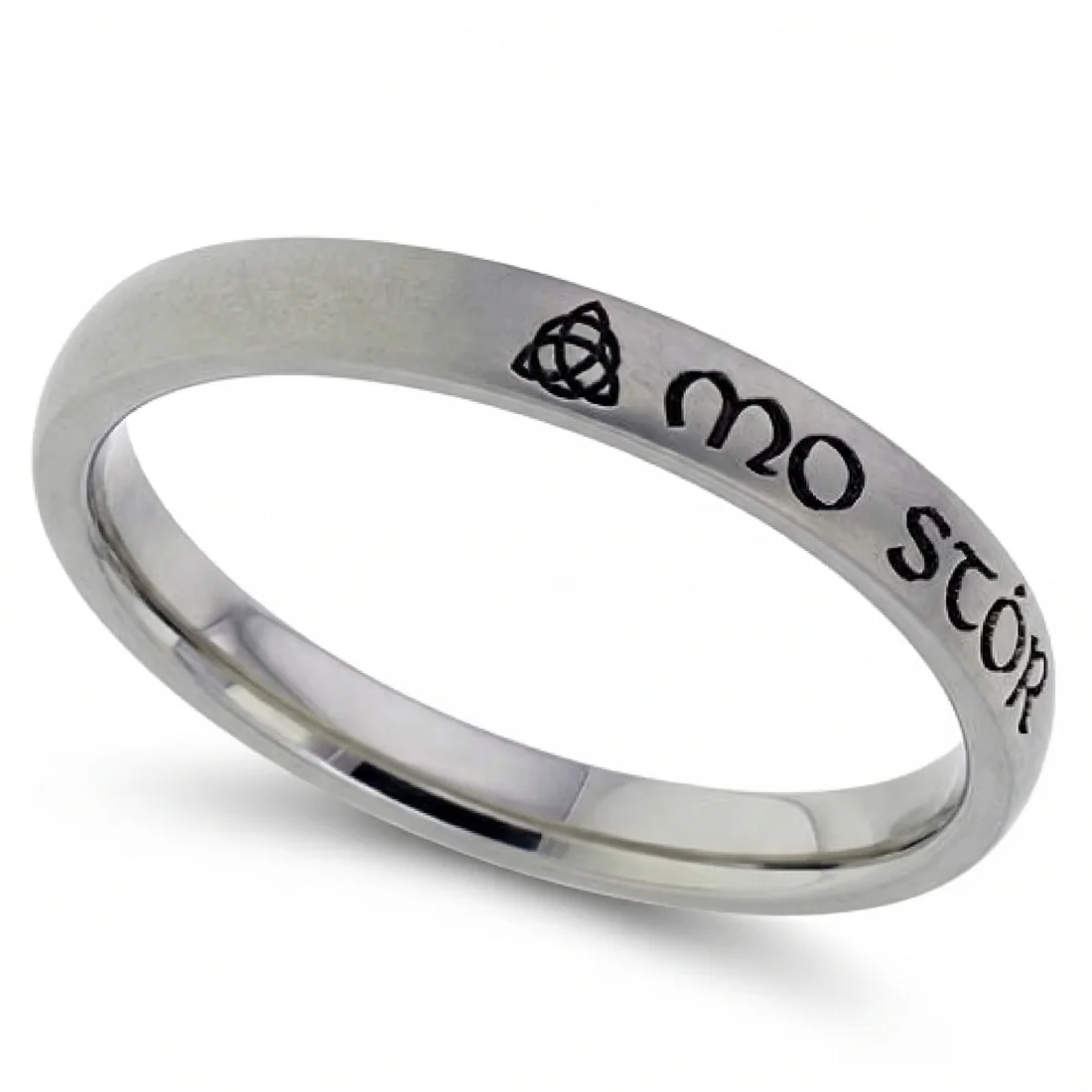
The same continuous knot is cut into both rings, and the metal changes how it reads. On Celtic, in satin titanium, the knot shows through relief and shadow, pale grey with darker recesses. On Celtic, black, cut into black zirconium, the pattern is almost hidden, matte black on black, until light catches the edges of the cut and the knot appears. Drawn to be worn together, the two show one design by day and by dusk: open on one hand, discreet on the other.
Each ring on its own
Celtic is titanium, the lightest metal in the range, with its knot laser cut to a controlled depth. Celtic, black uses the same knotwork in black zirconium, whose hard oxide helps the fine detail resist scratches. Both are satin, both run from 4 to 10mm, and both are hypoallergenic. Either makes sense alone: the titanium ring for a band you barely feel, the black one for knotwork that keeps itself to itself.
The two rings compared
Hers and his, on the same measures | Hers | His |
|---|
| Ring | Celtic | Celtic, black |
|---|
| Metal | Titanium | Black zirconium |
|---|
| Width | 4 to 10mm | 4 to 10mm |
|---|
| Finish | satin | satin |
|---|
| Weight | About 2.2g at 6mm, est. | About 3.2g at 6mm, est. |
|---|
| Surface hardness | Mohs 6 | Mohs 8 |
|---|
| From | £269 | £449 |
|---|
Choosing between the options
The difference in feel is real. Titanium is markedly lighter than zirconium and takes fine marks more readily, while the black oxide is harder. A couple choosing one of these for a single hand might decide on weight; choosing for two, the pairing gives each person the version that suits. Matched widths emphasise the shared pattern, and different widths suit fingers of different sizes.
More pairs on his and hers wedding rings. Wondering whether your rings need to match at all?
Mixing metals in wedding rings covers it.