5 minute read
Can nurses and food handlers wear a wedding ring?
Usually one plain band and nothing else. NHS England's guidance lets local policies allow a single plain metal ring. The Food Standards Agency's guidance makes the same exception for a plain wedding band. Here is what plain means in practice and what to choose if you work under those rules.

Can nurses wear wedding rings in the NHS?
In most trusts, one plain band. NHS England's 2020 guidance on uniforms and workwear says nothing should be worn during patient care that could compromise patient or staff safety, rings included, then adds: "Local policies may allow a single plain metal ring, such as a wedding ring."
So the national guidance leaves the decision to each trust. Trust policies mostly say the same thing in their own words: one plain band, no stones, during direct patient care. The rule is about hand hygiene. Skin under a ring is hard to wash and a stone setting holds dirt, which is why the familiar phrase is bare below the elbows.
What counts as a plain wedding ring at work?
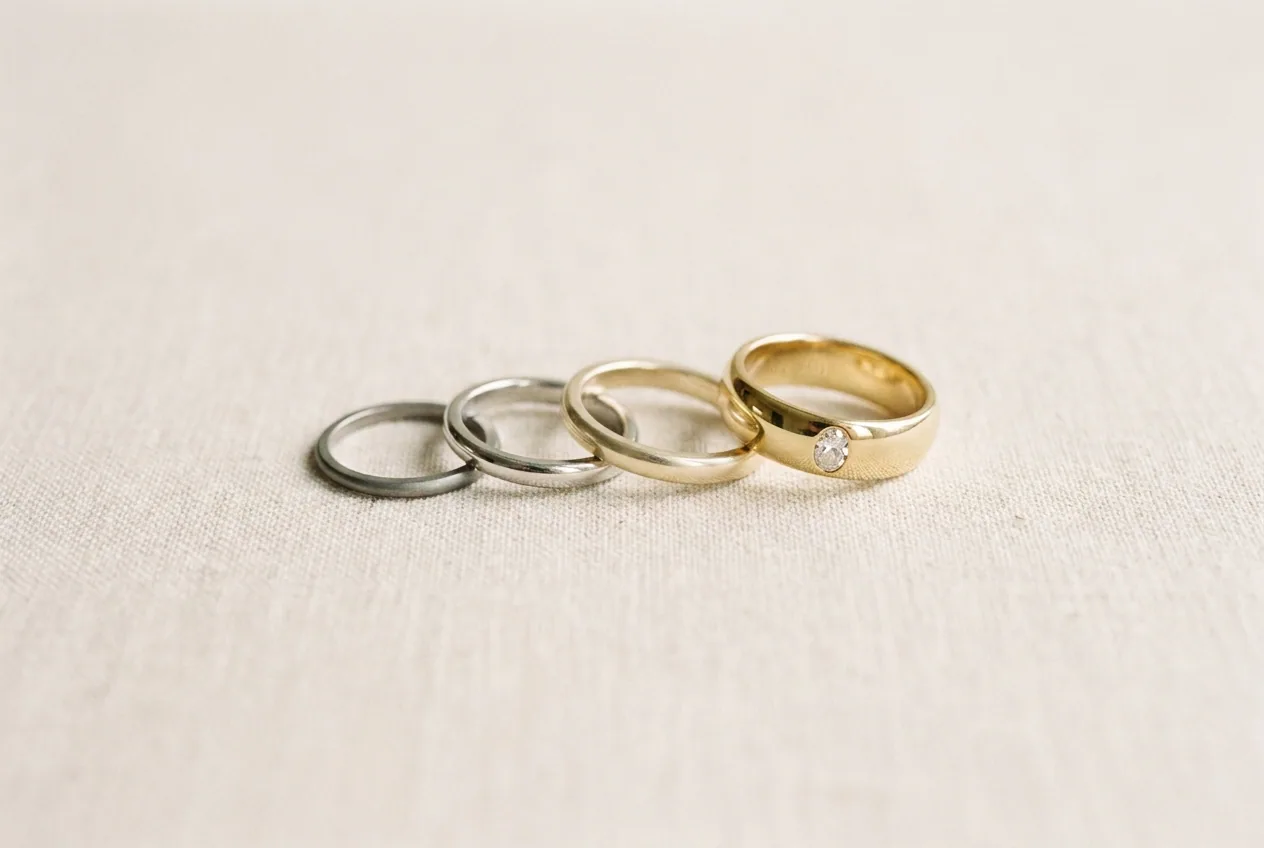
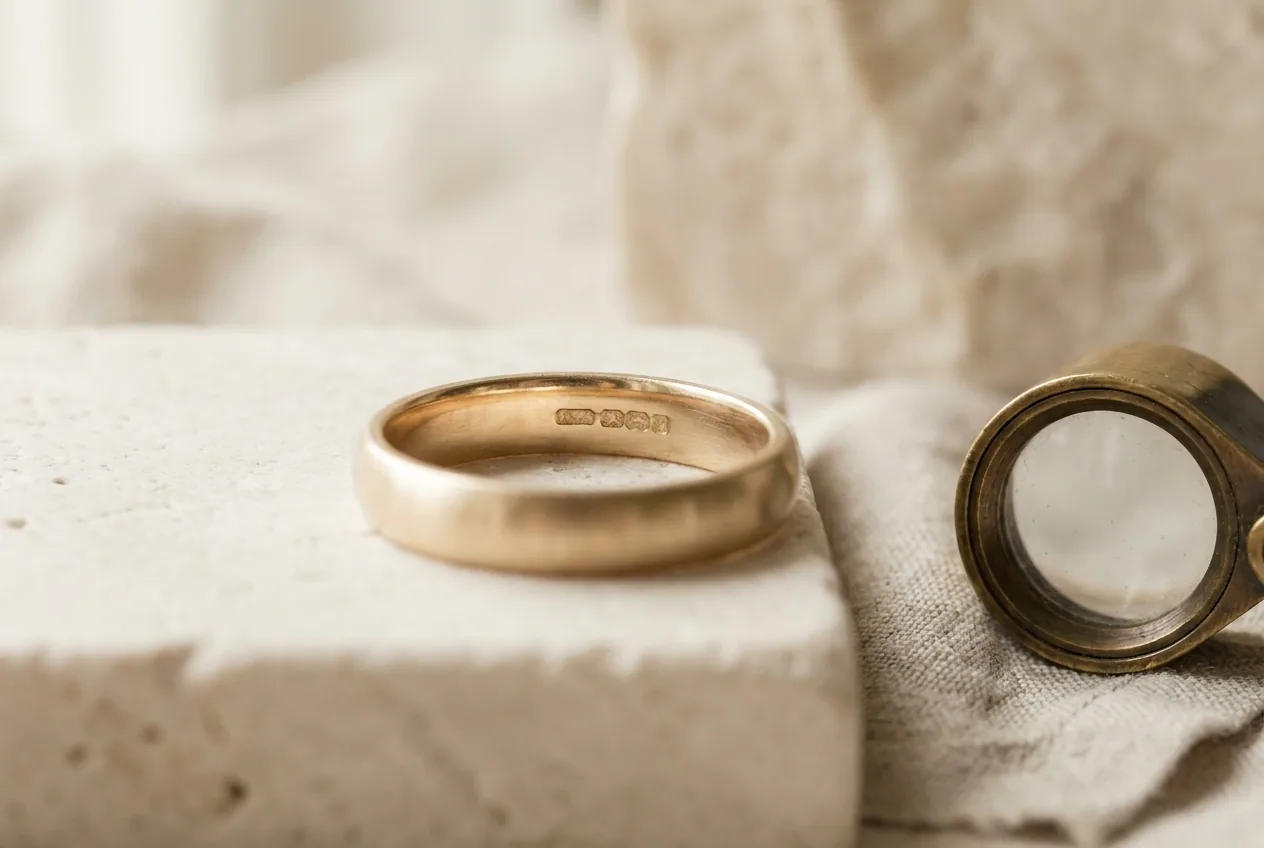
No stones, nothing raised and nothing to catch. Trust policies describe it as a plain metal band, a plain band in the wedding ring style or a single plain un-stoned ring. A smooth band with a flat or gently rounded face fits that description.
Patterns cut into the surface, such as knurling, hammering or grooves, are where wording differs between employers, because they are not stones but they are not smooth either. If your ring has any texture, check your own trust's uniform or infection control policy before you rely on it.
Wedding ring profiles explained: Flat, court and flat court bands and how each feels.
Can food handlers and chefs wear a wedding ring?
Usually, a plain band. The Food Standards Agency's Safer Food, Better Business pack tells staff not to wear watches or jewellery when preparing food, "except a plain wedding band". A stone can fall into food and a setting traps food and bacteria, which a smooth band does not.
Employers can be stricter than the guidance. Some food factories ask for no rings at all. Follow your workplace's own rule.
What should I wear with my engagement ring at work?
The band alone. An engagement ring with a raised stone is exactly what these rules exclude. NHS guidance also lists necklaces among the things not to wear in patient care, so wearing it on a chain is not the answer either.
Many people in these jobs keep the engagement ring for days off and let the wedding band do the daily work. That is a reason to choose a band you are happy to wear on its own.
Engagement ring or wedding ring?: What each one is for and how they are worn together.
Which wedding ring is best for nurses?
A smooth band in a metal that shrugs off constant washing. Titanium and zirconium resist corrosion, so soap, gel and water do not tarnish them. They are also hypoallergenic, which matters on skin that is washed dozens of times a shift. A narrower band, 2mm to 4mm, leaves less skin underneath it to dry after washing.
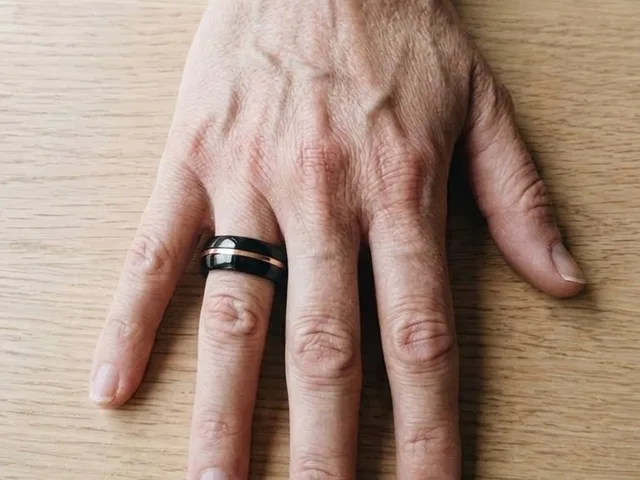
Our plain titanium and plain black zirconium bands have no stones, no pattern and a smooth face. Engraving goes on the inside, so it leaves the outside plain.
Plain titanium band: A smooth flat titanium band, satin or polished.
Plain black zirconium band: A smooth black band, grown black rather than plated.
Band width guide: How each width looks and feels on the hand.
What about silicone rings for work?
Some people wear a silicone band for shifts and keep the metal ring for the rest of the time. Whether silicone counts as a plain ring under your trust's policy is for the policy to say, since the national guidance speaks of a plain metal ring.
Our guide to silicone and metal rings sets out where each one makes sense.
Silicone or metal wedding ring?: When a silicone band makes sense and when it does not.
Wedding rings for hands on jobs: Trades, workshops and sport: what to wear and when to take it off.
Mentioned: titanium, black zirconium.