5 minute read
Engagement ring or wedding ring: what is the difference?
An engagement ring marks the promise to marry and usually carries a stone. A wedding ring is put on during the ceremony and is usually a plain band. You do not need both: some people wear one ring as both. Some couples never have an engagement ring at all.

What is the difference between an engagement ring and a wedding ring?
When it is given and what it usually looks like. An engagement ring is given when a couple agree to marry, often at a proposal. It is worn from then until the wedding and usually after it. A wedding ring is put on during the ceremony itself, as part of the vows. It is worn for the rest of the marriage.
By convention the engagement ring is the one with a stone, most often a diamond solitaire, while the wedding ring is a plain band of metal. Neither convention is a rule. Many engagement rings have no stone at all. Many wedding rings carry diamonds set into the band.
Engagement rings: Diamonds set into a titanium or black zirconium band, for him or her.
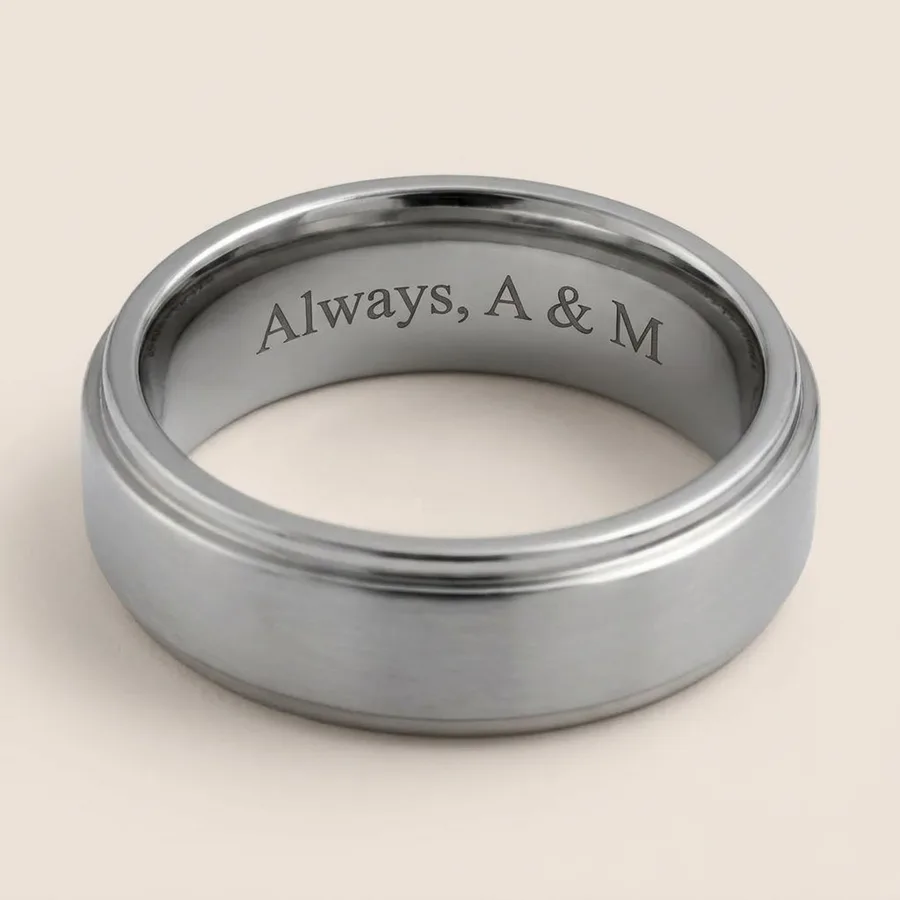
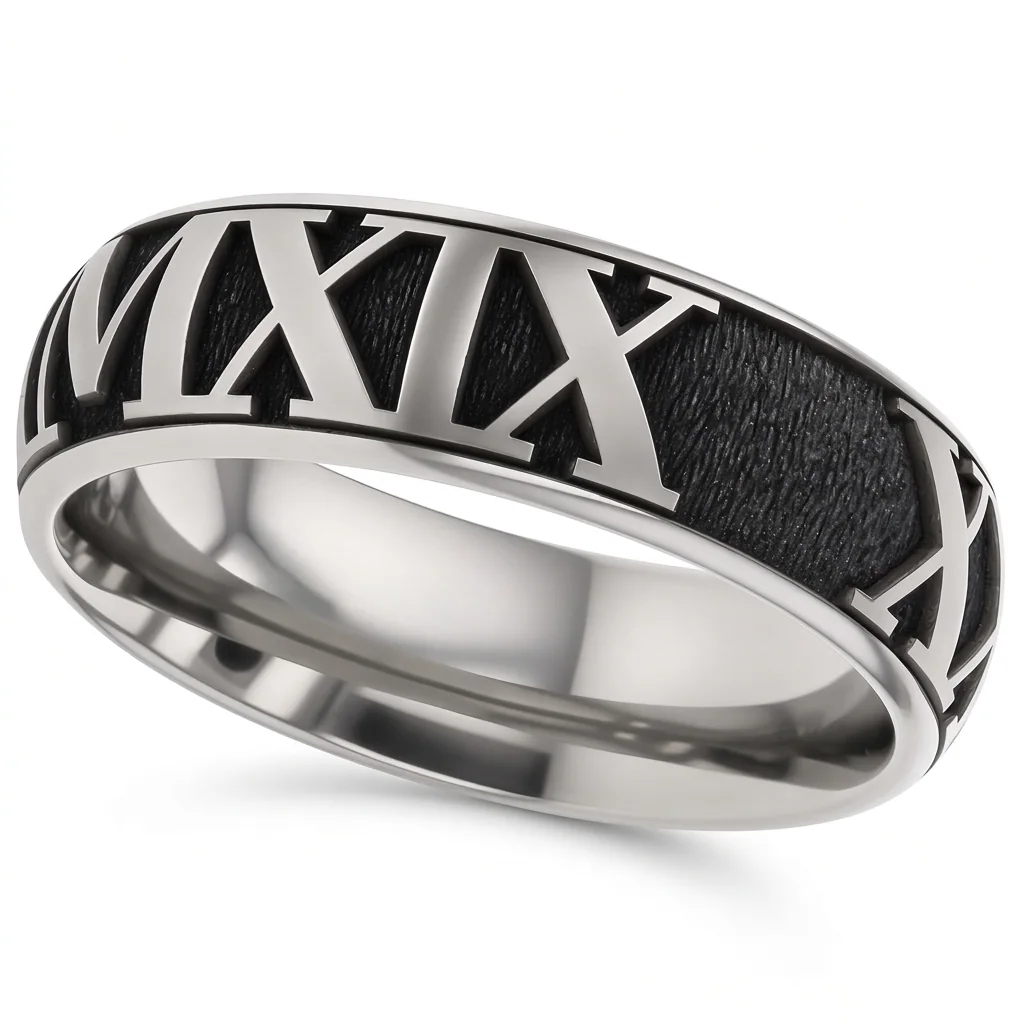
Wedding rings: Titanium, zirconium and gold bands, made to order in your size.
What is a promise ring?: What it means, which finger and how it differs from an engagement ring.
Do you need both an engagement ring and a wedding ring?
No. Rings are a custom, not a requirement. Couples arrange them however suits them. Some people wear only a wedding ring. Some wear their engagement ring as their wedding ring. Some couples skip the engagement ring altogether and put the money into the wedding bands.
Wearing both has a practical logic. The engagement ring carries the stone, while the wedding band is the plain ring that can be worn every day, through work and sport, without a setting to catch or knock.
Can you propose without a ring?: Yes. What to do instead on the day.
Do men wear engagement rings?: When men wear one, what it looks like and what happens to it after the wedding.
Can an engagement ring be used as a wedding ring?
Yes. If the engagement ring is the ring you want to wear for life, it can be put on again during the ceremony and become the wedding ring. A band with diamonds set into the metal suits this well: it sits as comfortably as a plain band and still has the sparkle of an engagement ring.
It works the other way round too. A plain band given at the proposal can become the wedding ring, with a stone ring added later for an anniversary, which is where eternity rings come in.
Diamond rings: Bands with one to twelve diamonds set into titanium or black zirconium.
Eternity ring or anniversary ring?: What each one is and when it is given.
Which goes on first, the engagement ring or the wedding ring?
The wedding ring, closest to the hand. A common way to manage it on the day is to move the engagement ring to the right hand before the ceremony, so the wedding ring goes on first, then to put the engagement ring back on above it afterwards.
Both are worn on the fourth finger of the left hand in the UK, the finger next to the little finger. Our guide to which hand and finger covers the countries that wear them on the right.
Which hand and finger?: Where the wedding ring goes, above or below the engagement ring.
Should the wedding band be chosen with the engagement ring beside it?
Yes, because the two will sit on one finger for decades. The band's width, profile and metal need to suit the engagement ring's setting. A slim band of 2mm or 3mm is the classic choice beside a solitaire. A ring with a low setting can leave a small gap beside a straight band, which many people like.
If the engagement ring came first, take it with you when you choose the band. Or photograph your hand wearing it and use our free ring try-on, which draws a band onto that photo so you can see the two together.
Ring try-on: See a band beside the ring you already wear, on a photo of your hand.
Can you mix metals?: A band in a different metal from the engagement ring, with how the two wear together.
Should you spend more on the engagement ring or the wedding ring?
Usually the engagement ring, because the stone is most of its price, while a plain wedding band's price is mostly its metal and its making. That is a pattern, not a rule: a couple who skip the engagement ring often spend on the bands instead.
The budget planner shows what a figure buys in metal, width and stone at our real prices. Our guide to how much to spend works through both rings.
Budget planner: Put in a number and see what it actually buys.
How much to spend on a wedding ring: What drives the price of each ring and where the money goes.