5 minute read
How much to spend
The three months' salary rule was written by an advertising agency in 1938. Here is what actually drives the number instead.

Where the rule came from
The three months' salary guideline was invented by N. W. Ayer & Son, the advertising agency working for De Beers, and pushed through American campaigns from the late 1930s onward. It started at one month, became two, and reached three by the 1980s. It has no basis in tradition, etiquette or economics.
It is worth knowing the provenance because it is still quoted as though it were a custom rather than a marketing target.
What actually drives a plain band's price
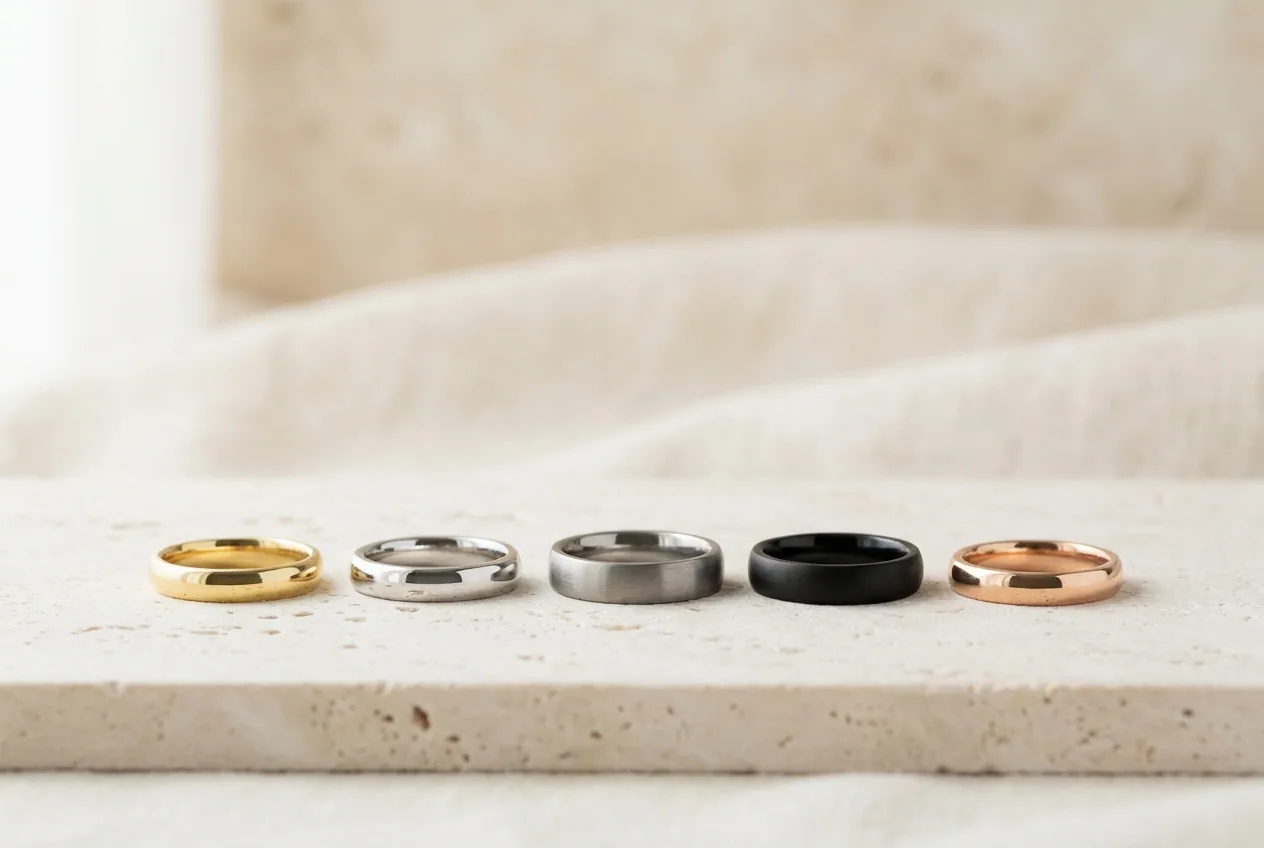
Metal, by weight. A wedding band is a piece of metal with no stone and very little labour compared with its material cost, so the price follows density and the price per gram of the metal.
That is why width matters so much. A 10mm band is roughly two and a half times the metal of a 4mm band in the same size, and therefore roughly two and a half times the metal cost. Changing width moves the price more than changing the finish, the profile, or the maker.
What drives an engagement ring's price
The stone, usually by a wide margin. The mount is a relatively fixed cost across a range of stone sizes, so as the stone gets larger it comes to dominate the total.
Cut is where the money works hardest. An excellently cut stone at a lower colour grade will outperform a poorly cut stone two grades higher, because cut is what makes a stone return light. Carat is what people ask about and cut is what they actually see.
A sensible way to set the number
Decide what you can spend without borrowing, then work out what that reaches rather than starting from a ring and working backwards. UK couples commonly spend between £1,000 and £2,500 on an engagement ring and rather less per wedding band, and plenty spend far less on rings they prefer.
If the budget has to bend, bend it toward the wedding ring. It is worn more, by both of you, for longer, and it is the one that comes off least.
Where money is genuinely wasted
Paying a premium for a colour grade nobody can see without a loupe. Buying width you do not want because it feels more generous. Choosing a soft stone because it looks striking in a photograph and then replacing it in five years.
And plating. A black or white plated ring costs less at the counter and needs redoing every one to three years, which is not a saving.