6 minute read
How to choose a wedding ring
Five decisions to make together: metal, width, profile, finish and size. Start with the way you will wear the ring, then check the complete design before ordering.

Start with how the hand is used, not with the metal
Make a short list of what the ring needs to suit: daily work, an engagement ring, a preferred colour, a comfortable weight and the care you are willing to give it. For hands-on activities, plan when to remove it. GETi specifically warns that black zirconium can be damaged by gardening, climbing and gym equipment despite its hard surface. Follow workplace rules around machinery; choosing a harder metal does not make wearing jewellery appropriate for every task.
Avoid choosing from a universal durability league table. Scratch resistance is only part of the decision: the alloy, construction, surface and any stones also matter. GIA explains that gold is alloyed to change its working properties and colour. A single hardness number cannot predict when your particular gold ring will mark, or how much maintenance another metal will need.
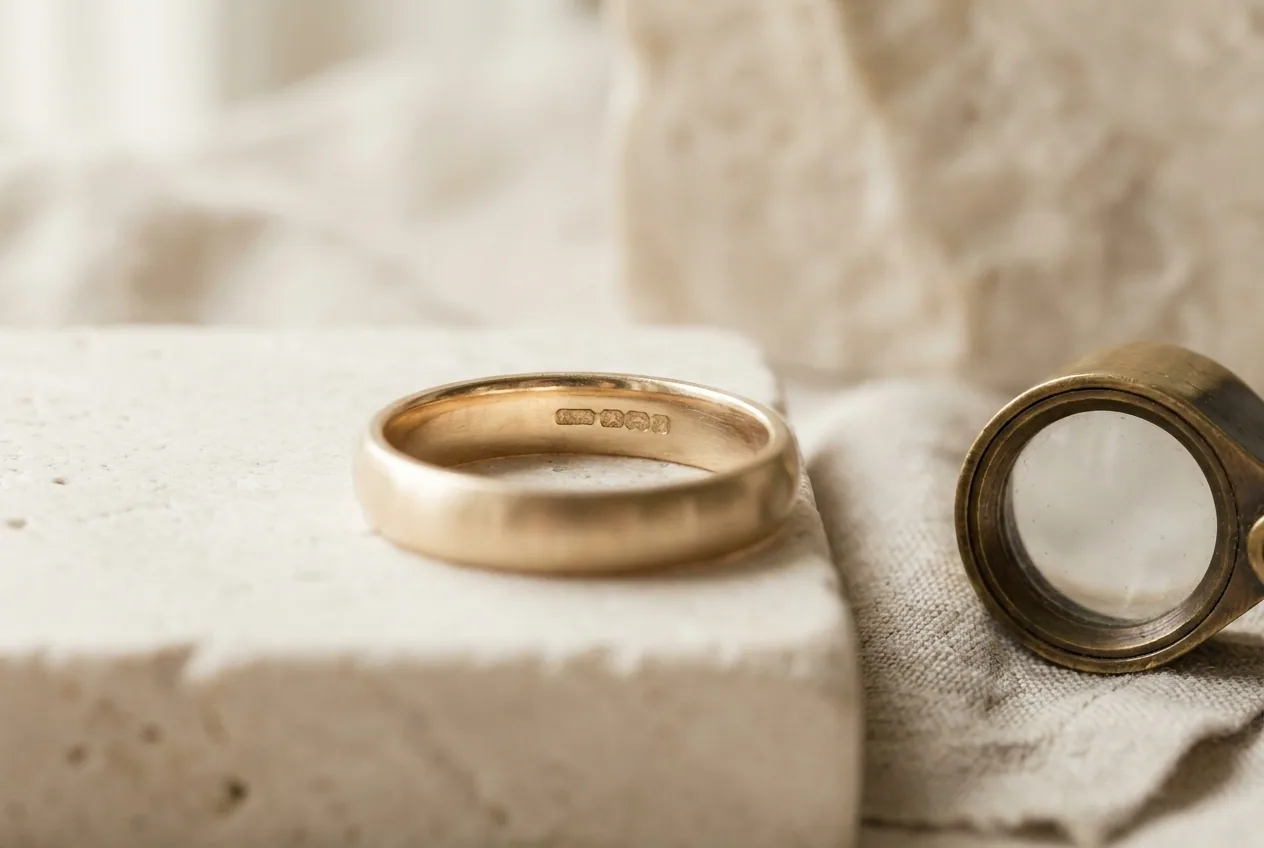
Ask what the ring is actually made of, including any inlay or plating. For precious metals sold in the UK, hallmarking is generally required at the minimum weight thresholds: 1g for gold and palladium, 7.78g for silver and 0.5g for platinum. A legally recognised hallmark verifies precious-metal fineness; it is not a durability guarantee. Use the hallmark decoder below for the marks rather than judging purity from colour.
If the band contains gemstones, ask for their identity and any treatments in writing. Heat treatment and fracture filling are different disclosures: GIA describes heat-treated sapphire as durable, while filled sapphire needs greater care. Use the stone-durability tool to compare care needs before deciding whether a stone-set band suits the way you intend to wear it.
Then width, because it changes everything downstream
Try several widths on the intended finger. Compare the look with your hand open and the feel when you close it or hold an everyday object. There is no width you need to choose because you are a man or a woman, and no popularity figure here that should overrule your own fit.
Width is the distance across the band along your finger. Depth is how far the ring stands away from the skin. Two rings with the same width can therefore look and feel different. A broad band or a stack can feel tighter than a narrow measuring ring, so have the fit checked using a comparable width and profile instead of automatically adding half a size.
Use the band-width guide below to compare proportions, then check the widths available on the particular product page. The ring-weight estimator can help compare plain-band materials at the same dimensions; it is an estimate, not a finished-ring weight or a quotation. Check the displayed product price again after selecting the width.
Profile is the part nobody explains
Profile describes the cross-section. A court band is rounded inside and out; a D-shaped band has a rounded outside and a flatter inside. A flat-court profile combines a flatter outer face with a curved inner face. Makers use profile names differently, so ask to see the section drawing or try the actual sample rather than relying on the name alone.
Comfort is personal. Compare how the inner curve and edges feel as the ring passes the knuckle and rests at the base of the finger. Look at the depth as well as the width, and check that adjacent fingers can rest comfortably. A label such as comfort fit is a useful description to investigate, not a promise that every wearer will prefer it.
Bring your engagement ring when choosing a wedding band for the same finger. Ask the jeweller to inspect where the band meets the setting and whether an edge can rub against a claw or stone. GIA warns that stacking can cause wear and that the combined width can affect fit. Matching metal alone does not establish compatibility; a straight band, shaped band or spacer needs assessment with the actual setting.
Choose a finish with its future care in mind
Polished, brushed, matt and hammered finishes change how light catches the ring. Compare samples in ordinary light and ask to see a worn example if one is available. Choose the appearance you enjoy now, while accepting that the surface may change with wear.
A future change of finish needs the maker's assessment. Do not assume that any jeweller can refinish any metal cheaply. An inlay, engraved pattern, stone setting or coloured surface can restrict the work. Ask which changes the workshop can make to this design, what would be removed, and how it quotes for the work before treating the finish as reversible.
White gold is often rhodium plated, according to GIA; renewing that layer is different from polishing the underlying alloy. Black zirconium has a heat-formed oxide surface over naturally pale metal, and GETi describes both possible damage and refurbishment. Anodised colour is also a surface effect. Ask the maker how its particular colour and texture should be maintained instead of assuming that the colour extends through the whole ring.
Size last, and measure properly
Make the final size decision once the width, profile and any neighbouring ring are known. GIA recommends measurement by a jeweller with finger gauges and notes that temperature and time of day affect finger size. If readings vary, take that range to the fitter; do not automatically choose the largest reading. Check both passage over the knuckle and comfort at the base of the intended finger.
Our ring-size finder below helps you understand UK sizes and prepare for that check. Treat a home measurement as a starting point. GIA warns that string can stretch and paper can distort, and neither reproduces a rigid ring passing over the knuckle. Confirm the fit before committing to a design whose alteration options are limited.
Ask about resizing before ordering, even for a precious-metal ring. GETi explains that titanium options depend on grade, wall thickness, inlays, stones and whether the size must go up or down. Its black-zirconium guidance also describes resizing as difficult rather than universally impossible. An alteration, a remake and a return are different outcomes: ask which applies to the exact ring and keep the answer with its specification.
Before paying, review the selected width and size, the engraving, the current making and delivery estimate, and the returns terms for that product. Tell the seller the date you need the ring and ask what happens if the fit needs attention. For the Trothe designs mentioned below, follow the material page to the available rings and use each product's current options and ordering information. An article cannot reserve a workshop slot or promise a delivery date.
Mentioned: titanium, black zirconium, precious inlay.