6 minute read
Why some rings cannot be resized
Sometimes the maker can help. The answer depends on the finished ring, the direction of the size change and whether the original band can be kept.

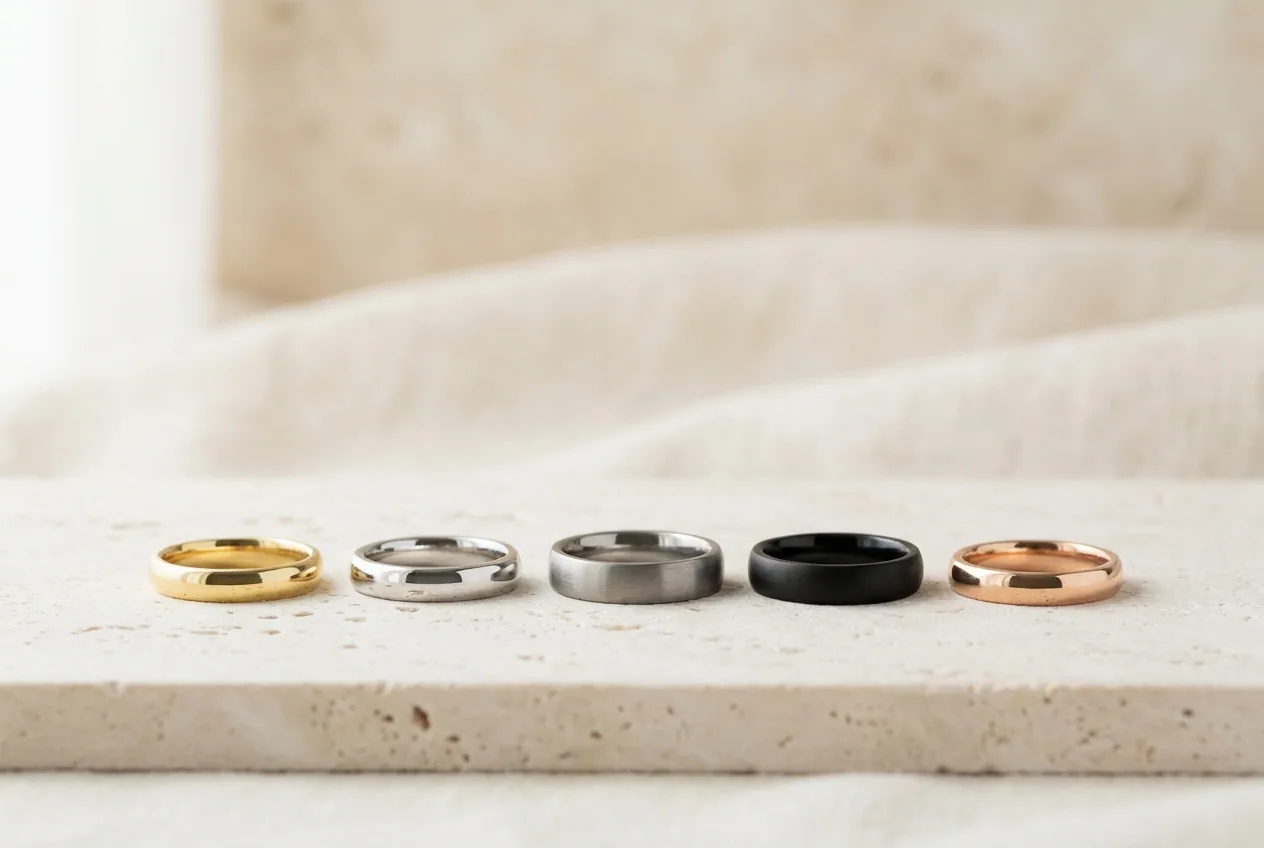
Can black zirconium be resized?
Not in the ordinary way, and not by a local jeweller. The black is an oxide grown into the surface by heat, so cutting or heating the band damages the colour. GETi will look at a particular ring, but the usual answer for a size change is a new ring rather than an altered one.
Our earlier advice that nobody could resize zirconium was too absolute. Do not buy on the assumption that a future alteration is available: ask the maker to confirm your design, current size and proposed size in writing. A general statement about the metal is not approval for your ring.
Black zirconium has a surface formed by heat treatment. The finished surface is part of what the workshop must consider. GETi also discusses refurbishment, so a claim that the surface can never be restored is not a sound reason to rule out every repair. Coloured, inlaid and stone-set designs need their own assessment.
A resize, a remake and a replacement are different outcomes
Ask a simple question before accepting a quote: will I receive this same band back? A resize alters the existing ring. A remake produces another ring to the required specification. A replacement supplies another item, which may or may not reproduce every original detail.
That distinction matters if the ring carries a personal inscription or was exchanged at your wedding. Tell the workshop whether preserving the original band is your priority, and ask what happens to engraving, surface finish, stones and any inlay. Keep photographs of the inside and outside before sending it away.
Separate technical feasibility from the service being offered. A maker may be able to do an alteration but decline a particular job, or offer a remake instead. GETi publishes a separate remake policy for rings it cannot resize. Those manufacturer terms are not a Trothe customer quote or a guarantee that your ring qualifies.
Why titanium needs a design-specific answer
GETi identifies titanium grade, wall thickness, stones, inlays and the direction of the change as factors in resizing. Its guidance distinguishes commercially pure grade 2, which can be stretched or compressed, from grade 5, where enlarging the inside bore may be the available route.
Removing metal from the bore makes the opening larger; it cannot make a loose ring smaller. It also leaves less metal in the band. GETi warns that stones, outside patterns and inlays constrain the work: stretching an inlaid ring can split its inlay, while deformation around stone seats can cause damage.
Ask for a limit for the particular ring rather than applying an advertised size allowance to every titanium band. The maker may recommend a new ring when alteration and refinishing are impractical. These are workshop decisions, not instructions to stretch or grind a ring at home.
Gold and platinum are not an unconditional yes
Precious-metal bands often offer more conventional repair options, but the design still matters. GIA demonstrates stretching a suitable plain platinum band and warns against stretching bands containing stones because it can weaken the areas around them.
GIA also identifies pavé, channel and full eternity settings as difficult to resize. A tension setting can be especially restrictive because the band provides the pressure holding the stone. Choosing gold or platinum does not remove those construction limits.
If future adjustment is a priority, ask to compare the resizing options of a plain band and the decorated design you are considering. Get the answer for the finished ring, including its stones and any previous work, rather than treating the metal name as a lifetime guarantee.
Check the fit before choosing the repair
Ask a jeweller to measure the intended finger with a gauge suited to the proposed band. GIA advises appropriate gauges for wide rings and special consideration for a wedding band worn beside an engagement ring. A narrow ring that fits well does not settle how a wider stack will feel.
Bring the rings you plan to wear together. Explain whether the problem is getting the band over the knuckle, looseness at the base of the finger, or the combined width of a stack. These describe different fit problems; simply asking for a smaller size can leave the important one unanswered.
Use the ring size finder and converter below to understand an existing measurement and communicate it clearly. They help organise the information for a fitting; they do not establish that a particular design can safely be altered.
What to send with a resizing enquiry
Give the maker the order reference or model, metal and grade if known, present size, requested size and the sizing system used. Include the band width, clear photographs, and details of stones, inlays, engraving and previous repairs. If a measurement is uncertain, say so rather than presenting an estimate as a confirmed size.
Ask whether the proposal alters the original ring, what size change is feasible, and whether the finish or inscription must be redone. Request the total quote, expected turnaround, delivery arrangements and what happens if inspection shows that the work cannot proceed.
Keep the response with the receipt and specification. If you are choosing a ring now, the same questions help you compare future maintenance without relying on a generic resizable label. A confirmed option for one model should not be transferred to another.
If the original ring cannot be altered
Ask the retailer to explain the available options before authorising work: retaining the original and ordering another size, commissioning a remake, or choosing a different design. Where preserving the original matters more than wearing it on the same finger, make that preference part of the conversation.
If the ring has just arrived and the fit is wrong, contact the retailer before engraving or altering it and check the applicable returns terms. If you are still planning a surprise proposal, an accurate fitting or choosing the final ring together avoids depending on an unconfirmed resize.
Every Trothe ring is made to the size you give us, so for most people the question never arises: we confirm the size with you before anything is cut. If it still turns out wrong, an unengraved ring can come back within 30 days. Use the tools below to get it right the first time.
Mentioned: titanium, black zirconium, anodised zirconium, platinum 950.