5 minute read
Looking after a ring you never take off
Start with the metal, finish and any stones. A cleaning method that suits a plain band can be wrong for a treated gem or coloured surface. Here is how to choose a routine and recognise when to ask the maker.

Check the whole ring before choosing a cleaner
Keep the maker's care instructions with your order details. Record the metal, the surface finish, any inlay, the gemstone and any disclosed treatment. For an older ring without that information, ask a jeweller to identify what needs special care before trying a soak, polish or cleaning machine.
A hallmark helps identify a precious metal's fineness; it does not tell you everything about a ring's surface or stones. GIA has documented gold plating over other gold alloys, and white gold is often rhodium plated. Ask whether the visible colour is the underlying alloy or a surface finish.
Look for a loose stone, a claw catching on fabric, a distorted band or a newly damaged area. Put the ring aside and arrange an assessment if something has changed. Take a clear photograph and describe when you noticed it; do not try to straighten a band or tighten a setting at home.
Cleaning at home, with the exceptions first
For a sound diamond ring whose maker confirms that wet cleaning suits the entire design, mild soapy water and a clean, soft brush can remove ordinary grime. Work gently around the setting, rinse in a separate bowl and dry with a soft lint-free cloth. Avoid toothpaste, abrasive household cleaners and bleach. There is no five-minute recipe that suits every ring.
The gem name alone is not enough. GIA distinguishes untreated or heat-treated sapphire from fracture-filled, cavity-filled or dyed sapphire: the latter should only be cleaned with a damp cloth. Do not extend a diamond-cleaning routine to a pearl, opal, wood inlay or unknown treatment. Get instructions for that particular material and construction.
Ultrasonic and steam cleaning need a separate decision. Diamond, ruby or sapphire on the receipt does not automatically make a machine safe: treatments, inclusions and the setting matter. GIA warns that ultrasonics can loosen stones and damage some treated gems. Ask a jeweller to assess the complete ring before machine cleaning.
Use the stone durability tool below to understand scratching, toughness and stability, then check the specific stone's care requirements. A high Mohs number measures scratch resistance; it is not permission to use any cleaner.
When to take it off, and where to put it
Remove rings before swimming in a chlorinated pool or using household cleaners. GIA advises this for fine jewellery and notes that chlorine bleach can damage gold alloys. Avoid declaring an entire ring chlorine-proof from its metal name: stones, finishes and other parts need consideration too.
Take rings off before lifting weights, gardening or climbing where hard contact could damage them. GETi specifically warns about barbells and other harsh conditions for black zirconium. A durable surface does not make a ring immune to damage, and there is no supported ranking here of the most common causes.
Keep a dedicated box or pouch in a consistent place, with rings separated from other jewellery. Put the ring there before the activity starts. Avoid leaving it loose beside a sink or in a pocket with keys.
If a diamond looks dull, oils and accumulated dirt may be involved. That does not establish a fixed number of weeks until damage. If appropriate gentle cleaning does not resolve the change, have the stone and setting checked instead of scrubbing harder.
Plating, coloured surfaces and refinishing
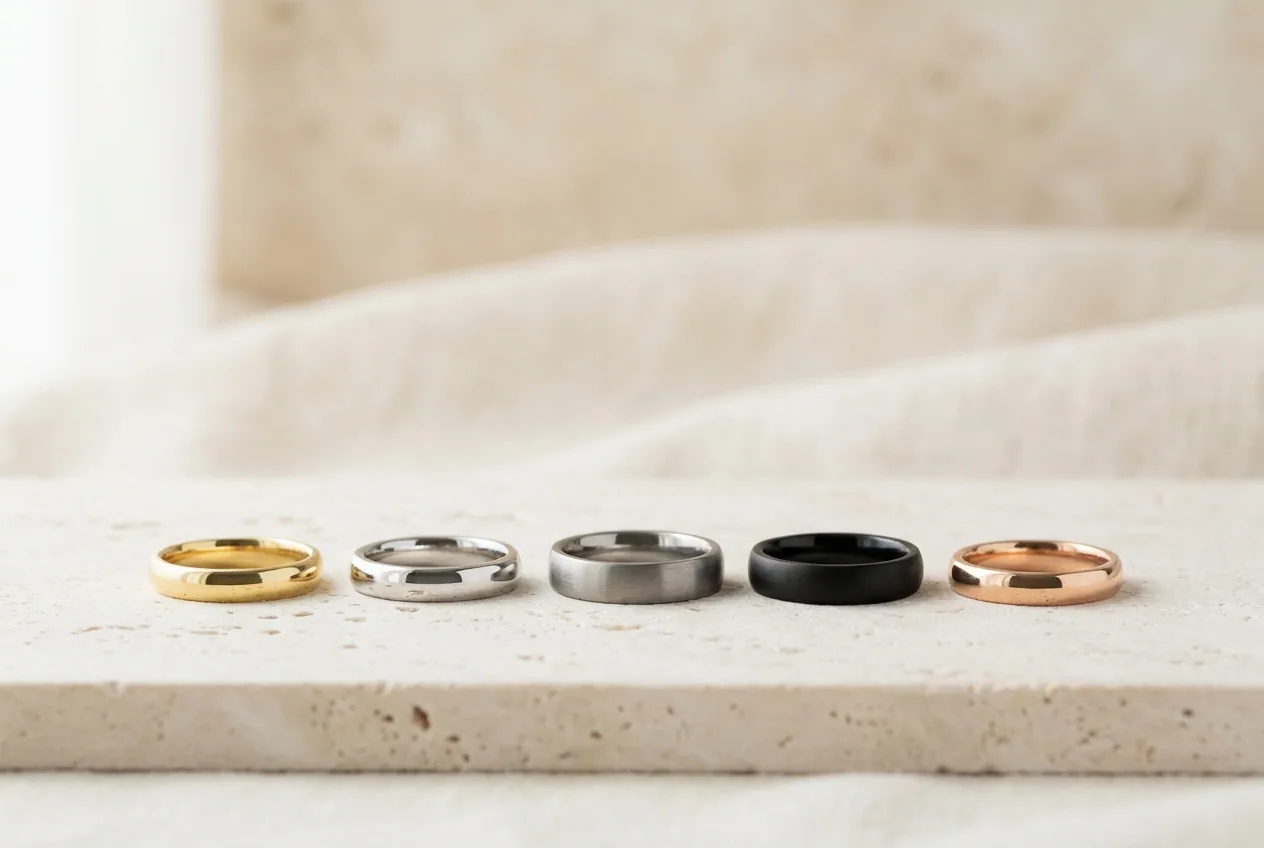
White gold is often finished with rhodium for a brighter white appearance. If that layer wears, the alloy beneath may look warmer. Ask whether your ring is plated and whether replating is appropriate for the finish you want; do not assume every white-gold ring needs the same treatment or a fixed one-to-three-year schedule.
Platinum is naturally white and does not require plating to be white. Some manufacturers nevertheless rhodium plate it, as GIA notes. Confirm the actual finish before deciding that a particular platinum ring will never need replating.
Black zirconium has a dark oxide surface over lighter metal. GETi explains that a pale mark can be transferred material, while harsh contact can also damage the surface. Ask the maker to assess a mark before treating it. Instructions for cleaning one black finish should not be transferred to anodised colour, an inlay or a stone setting.
For anodised colour or a combination of finishes, ask which areas may be cleaned or refinished and how. Do not authorise general buffing until the maker has confirmed it suits those surfaces. Request a written explanation of the proposed work, its cost and the likely result before agreeing to it.
Mentioned: 18ct gold, platinum 950, black zirconium, titanium.