5 minute read
Satin, polished or hammered: wedding ring finishes explained
A polished ring shines like a mirror and shows every fine mark. A satin ring, also called brushed, has a soft grain that hides them. A hammered ring hides them best of all. Every finish changes a little with wear and every one can be refreshed.

What is the difference between a satin and a polished ring?
A polished ring has a mirror surface. It throws back sharp highlights and reflections, so it reads bright and formal from across a room.
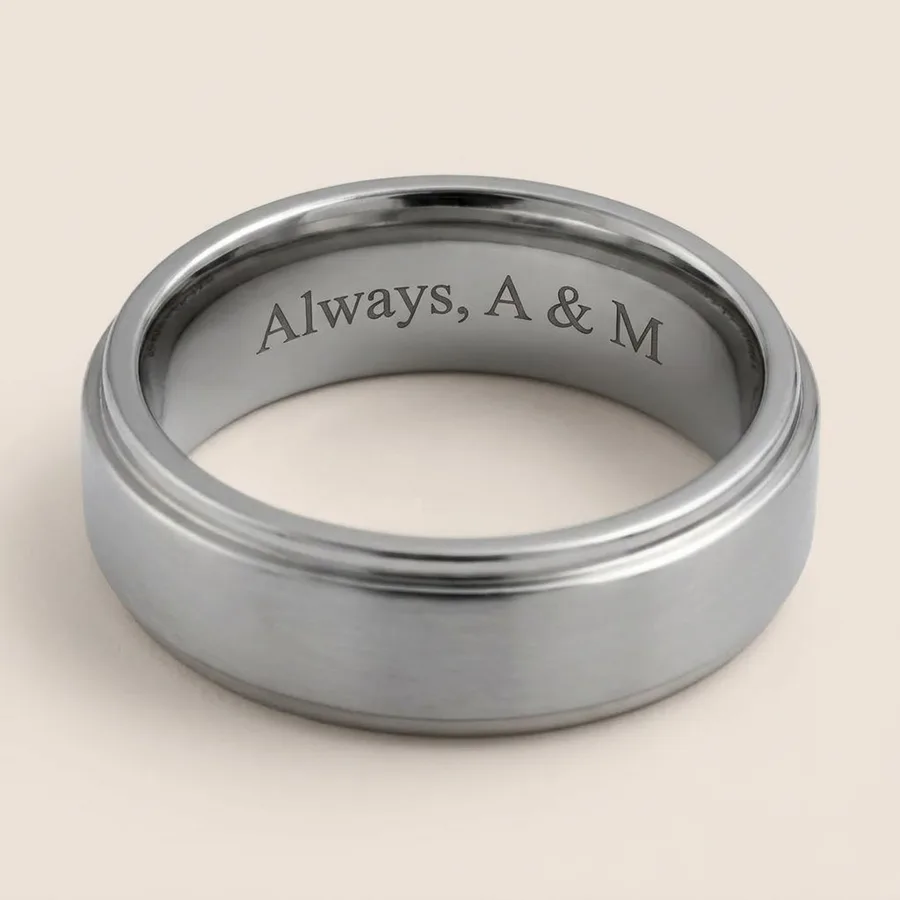
A satin ring has been brushed with an abrasive so the surface carries a fine, even grain. The grain scatters light instead of reflecting it, so the ring reads soft and quiet, closer to the colour of the metal itself. Satin and brushed mean the same thing on a ring. A matt or sandblasted finish is the same idea with no direction to the grain.
Most of our rings are satin, often with bright polished edges. Our plain titanium and plain black zirconium bands come in either finish, so the choice is yours on the simplest rings we make.
Plain titanium: A satin centre with bright polished edges, or polished all over, in 4 to 10mm.
Plain black zirconium: Black grown from the metal itself, satin or polished, in 4 to 10mm.
Which ring finish hides scratches best?
Hammered and textured finishes hide them best, then satin, then polished. A fine mark on a mirror surface breaks the reflection and catches the eye. On a satin grain it lies among thousands of lines already there. On a hammered surface it simply joins the texture.
Polished rings do not stay perfectly polished. With daily wear a polished band softens into a gentle satin of fine marks, which many people come to like. Satin rings change too, the other way: the edges and high points that rub against things slowly burnish brighter.
None of this is damage to worry about. On gold and platinum the marks are on the surface and a jeweller polishes them away. Titanium is harder than gold, about 6 on the Mohs scale against 2.5 to 3, so it marks less in the first place.
Does a satin finish wear off?
It cannot peel or flake, because the grain is cut into the metal rather than coated onto it. What happens over years is gentler: the grain softens where the ring sees the most contact. The ring looks a little more polished there.
A satin ring is refreshed by brushing the grain back in. On plain gold and platinum any jeweller can do that. On titanium, black zirconium and on any ring with an inlay, stones or a coloured surface, ask the maker first, because those surfaces limit what can be taken away. Our maker refinishes black zirconium depending on the damage.
How to look after a wedding ring: Cleaning, when to take it off and what each metal needs.
What is a hammered wedding ring?
A hammered ring has a surface worked into small facets, so the light breaks into many little highlights instead of one. It is the most forgiving finish for a ring worn every day: a scratch on a polished band announces itself. On a hammered one it joins in.
Our plain hammered titanium band is hammered by hand, so the pattern of facets is particular to the ring. It is finished with bright polished edges. We make hammered rings in titanium, black zirconium, anodised colour and solid gold.
A hammered ring is refreshed by cleaning rather than polishing, because polishing it flat would take the texture away.
Hammered wedding rings: Hammered bands in black zirconium, titanium, anodised colour and solid gold.
Hammered titanium: Hand hammered titanium with bright polished edges, the lightest hammered ring we make.
What other wedding ring finishes are there?
Faceted: the band is machined into flat planes around its circumference. Our faceted titanium ring has ten, so it reads as cut stone and each plane catches the light at its own angle.
Wire brushed: a heavier, deeper grain than satin, sometimes in criss-cross marks over the whole face. It is the most rugged looking of the brushed finishes.
Knurled: a fine diamond pattern cut into the band, like the grip on a tool or a watch crown. It is made to be felt as much as seen.
Sparkle and bark: cut or grooved textures on gold that break the light into points or lines. Next to a polished rail they give one ring two finishes at once.
Faceted titanium: Ten shallow facets machined around a titanium band.
Knurled black: A diamond knurl in black zirconium between two polished bevels.
Are wooden wedding rings durable?: Real wood set into titanium, water and care.
Which finish should you choose?
Choose polished if you love shine, if the ring sits beside a polished engagement ring or if you like the idea of a patina that builds up over the years. It is the classic finish for gold and platinum.
Choose satin if you want a ring that looks the same in a year as it does today. It is why so many titanium and black zirconium rings are made that way. It also suits hands that work hard.
Choose hammered or another texture if you are hard on rings or want the band to have more going on than a plain surface.
Two finishes in one couple are fine. Many couples pick the same metal in different finishes, or the same finish in different widths, so the rings belong together without being identical.
Do wedding rings have to match?: How couples coordinate rings without making them identical.
Ring try-on: See a satin or polished ring on a photo of your own hand. Free.
See a ring on your hand before you buy: The free try-on, a paper width test and a ring you already own.
Can you change a ring's finish later?
Usually, yes. A plain gold or platinum band can be polished bright or brushed to satin by any jeweller and changed back again later. Each refinish takes a tiny amount of metal, so it is an occasional job rather than a routine one.
Inlays, engraved patterns, stones and coloured surfaces change what is possible, because each one limits what can be polished away. On those designs the workshop that made the ring is the right place to ask.
Mentioned: titanium, black zirconium, 9ct gold.