7 minute read
What to do if a wedding ring is lost or damaged
Do the reversible things first. Preserve the trail, preserve every fragment, and settle the police and insurance record before anyone repairs or replaces the ring.

Start with the last place it was definitely there
Write down the last time you can prove the ring was on the finger, then reconstruct what happened after that in order. Look at photographs, messages, receipts and journeys rather than relying on the feeling that it must have been lost in one particular place. A shorter, evidenced search route is more useful than searching the whole house repeatedly.
Search from contained places outwards. Check pockets, cuffs, gloves, bedding, towels, wash bags, bins that have not been emptied, the washing machine seal, the car seat rails and the route between the sink and wherever the ring is normally stored. If it disappeared at a venue, contact that venue while the date, room and staff shift can still be identified. Give a description and contact number, but keep one identifying detail back so a possible find can be verified.
If the ring may have gone down a drain, into machinery or somewhere unsafe, stop using that equipment and call the appropriate tradesperson. A second loss or an injury is not a sensible way to rescue the first one.
Treat loss and theft as different records
A ring that slipped off needs a search and a lost-property trail. A ring taken from a bag, changing room, hotel room or home needs a crime record. Police.uk says a stolen item can be reported to the local force online where that service is available or by calling 101; 999 is for an offence in progress or an immediate danger, not a ring noticed missing later.
Record the date, location, circumstances and every item missing in the first report. Include the metal, colour, width, stones, engraving and any distinctive damage. Keep the reference number and update the same report if another item or identifying detail comes to light. An incomplete first description is harder to reconcile later with an insurance claim or a recovered ring.
Call the insurer before commissioning a repair or replacement
Read the policy schedule as well as the summary. The relevant questions are whether the ring was specified, the single-item limit, cover away from home, accidental-damage cover, the excess, and any condition requiring a valuation, inspection or police report. Cover and evidence rules vary by policy, so the document you bought outranks general advice online.
The Association of British Insurers advises contacting the insurer as soon as possible after insured damage or theft, keeping receipts for urgent work, and not throwing damaged items away because the insurer may want to inspect them. Apply that literally to jewellery: keep the bent band, broken setting, loose stone and even a tiny snapped section together in a closed container. Photograph every side before anyone cleans, straightens or tests it.
Ask the insurer what it wants next and whether it needs its own jeweller to inspect the ring. A repair that seems helpful can remove the evidence needed to decide whether damage was accidental, wear-related or covered at all. A replacement ordered too early can also leave you committed to a specification the insurer has not accepted.
Build the description from evidence, not memory
Put the purchase receipt or invoice, valuation, stone certificate, original order emails, card or bank record, photographs and police reference in one file. The ABI says an insurer may ask for proof of ownership and value and may accept forms of evidence including a receipt, invoice and recent photographs. Pictures in which the ring is being worn still help when the original paperwork has disappeared.
Describe what the evidence actually shows: metal and fineness, hallmark, width, profile, finish, finger size, engraving, maker, stone shape and certificate number. Do not fill gaps with a confident guess. Mark them as unknown and let a jeweller or insurer infer only what the photographs and documents support.
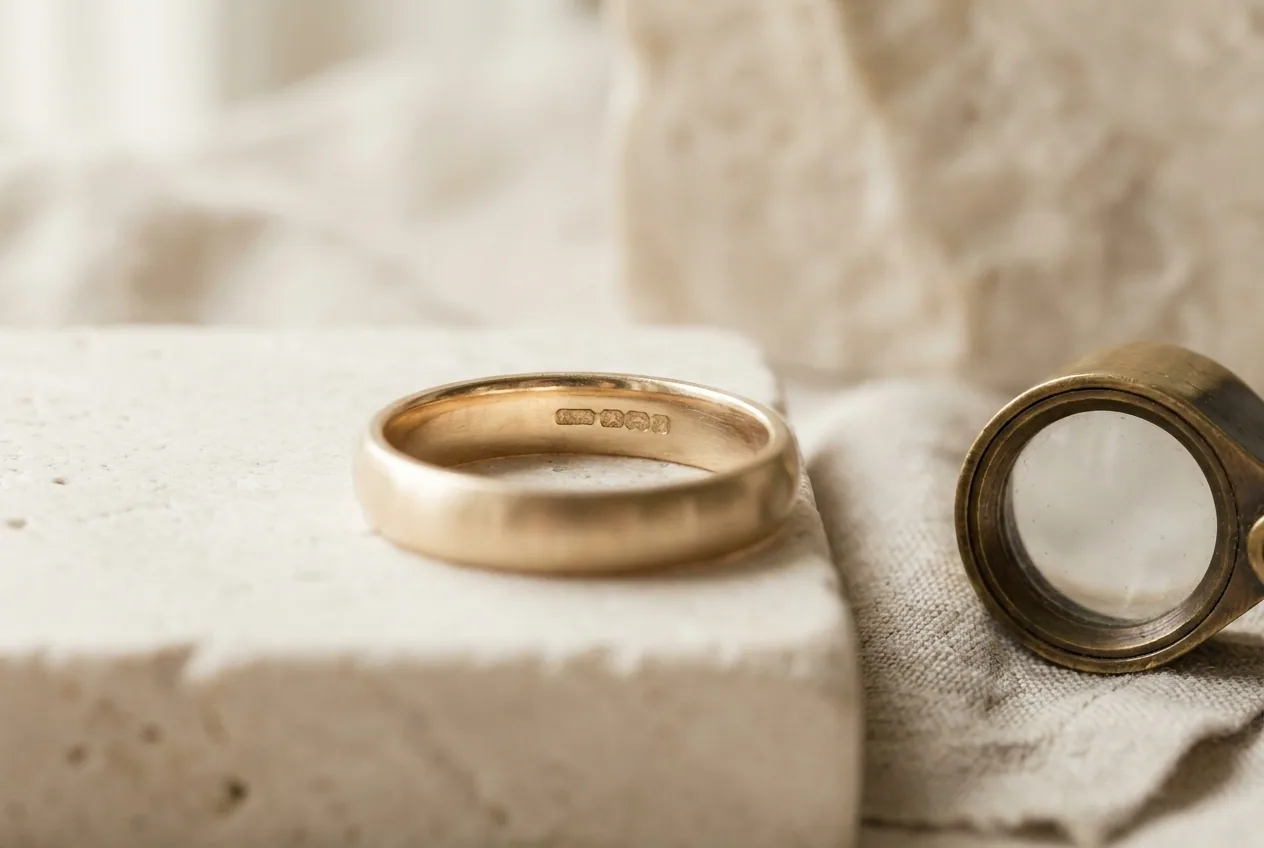
The inside of the ring is often the most useful missing photograph. A hallmark can establish the precious metal and fineness, an engraving can distinguish an otherwise plain band, and a maker's or sponsor's mark may help trace the workshop. Save those images now for every ring you still own.
A damaged ring should stop being a worn ring
The NHS advises removing rings from an injured hand because the fingers can swell. Take it off if it comes off normally, place it in a box, and resist the urge to push the band round, close a claw with pliers or test a loose stone. If the ring is trapped on an injured or swelling finger, get medical help rather than forcing it.
GIA warns that even one bent or broken prong no longer holds a diamond securely, and that an already chipped diamond is at greater risk of further damage. A rattle, a new gap beside a stone, a claw catching fabric, a visible crack or a band that has changed shape is enough reason to stop wearing the ring until a bench jeweller has inspected it.
Ask for the assessment in writing before authorising work. It should separate the immediate damage from earlier wear, state whether any stone is secure and identify which parts would be repaired, rebuilt or replaced. That distinction matters to the insurer and gives you something concrete against which to judge the finished repair.
Repairability follows the construction
A plain precious-metal shank, a stone setting and a ring built from contemporary metal are three different repair jobs. The right question is not simply whether rings can be repaired. It is whether this metal, finish, stone and join can be restored without creating a weaker or visibly different ring.
Hallmarking also survives repair by rules, not by accident. British Hallmarking Council guidance allows some repairs and sizing work to a pre-owned hallmarked gold, silver or platinum ring when the added metal meets stated conditions. Work outside those conditions may require assay-office involvement, and a replacement shank can affect the original mark. Ask the repairer whether the hallmark will be touched and whether the finished ring needs to be submitted again.
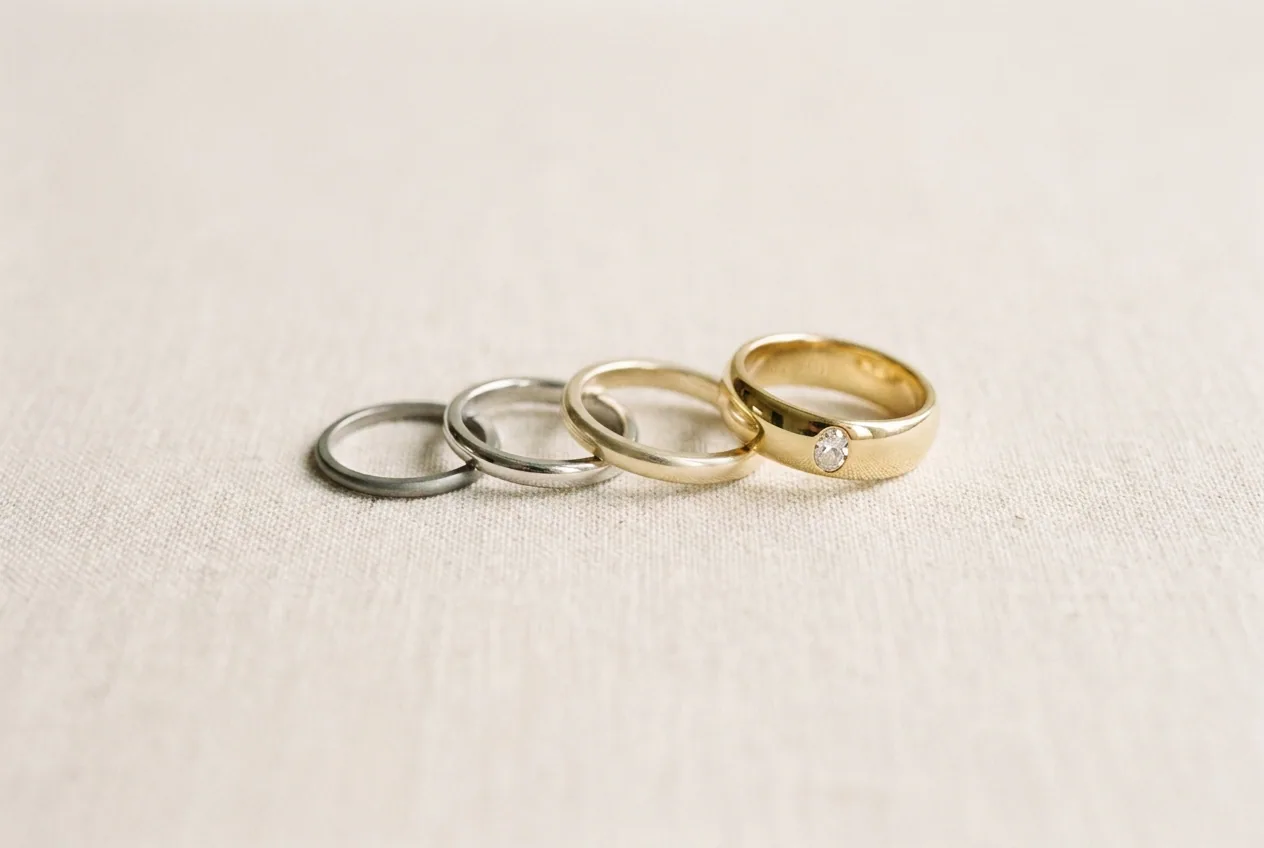
For titanium, zirconium, mixed-metal inlays, plating and specialist finishes, ask whether the original workshop must do the work and what will happen to colour, engraving and surface texture. A repair can be structurally sound and still fail to look like the ring you handed over; agree that difference before the work begins.
If it cannot be recovered, specify the meaning before the metal
A faithful replacement starts with a short record of what must remain the same. That may be the original engraving, the width seen against another ring, a worn finish, a particular stone or simply the fact that both partners' bands were made together. Separate those emotional constants from measurements that can be recovered from the invoice, photographs or a matching partner's ring.
Measure the finger again rather than ordering the remembered size. The original may have been loose enough to fall, the hand may have changed, or the old size may only have worked because the band was narrower. Use the tools below to rebuild the practical specification, then have the maker confirm what the photographs do and do not prove.
Do not engrave or irreversibly alter a replacement until the claim is agreed and the chance of recovery has been considered. If the original appears after an insurer has settled, contact the insurer before selling, altering or giving either ring away; the policy and settlement terms determine what happens next.
Make the next incident easier to prove
Photograph the ring from above, from the side and inside the shank. Keep the receipt, current valuation, certificate, size, dimensions and engraving with the policy record rather than only in an email account you may later lose. Check that the value and away-from-home cover still match the policy you think you have.
Give the ring one deliberate home when it is taken off: a closed box or dish away from sinks, towels and open bins. The useful habit is not never removing it. It is never placing it somewhere temporary.
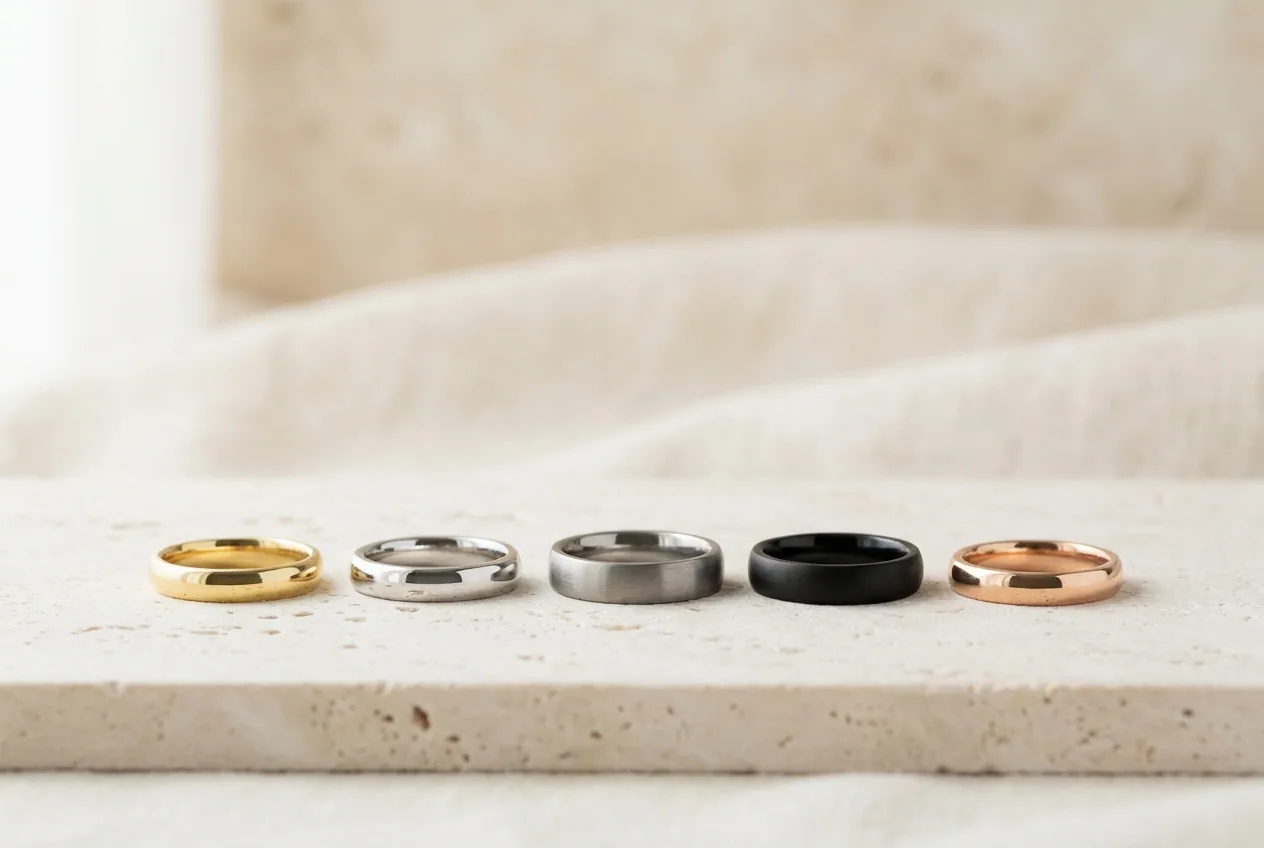
Mentioned: 9ct gold, 18ct gold, platinum 950, titanium, black zirconium.